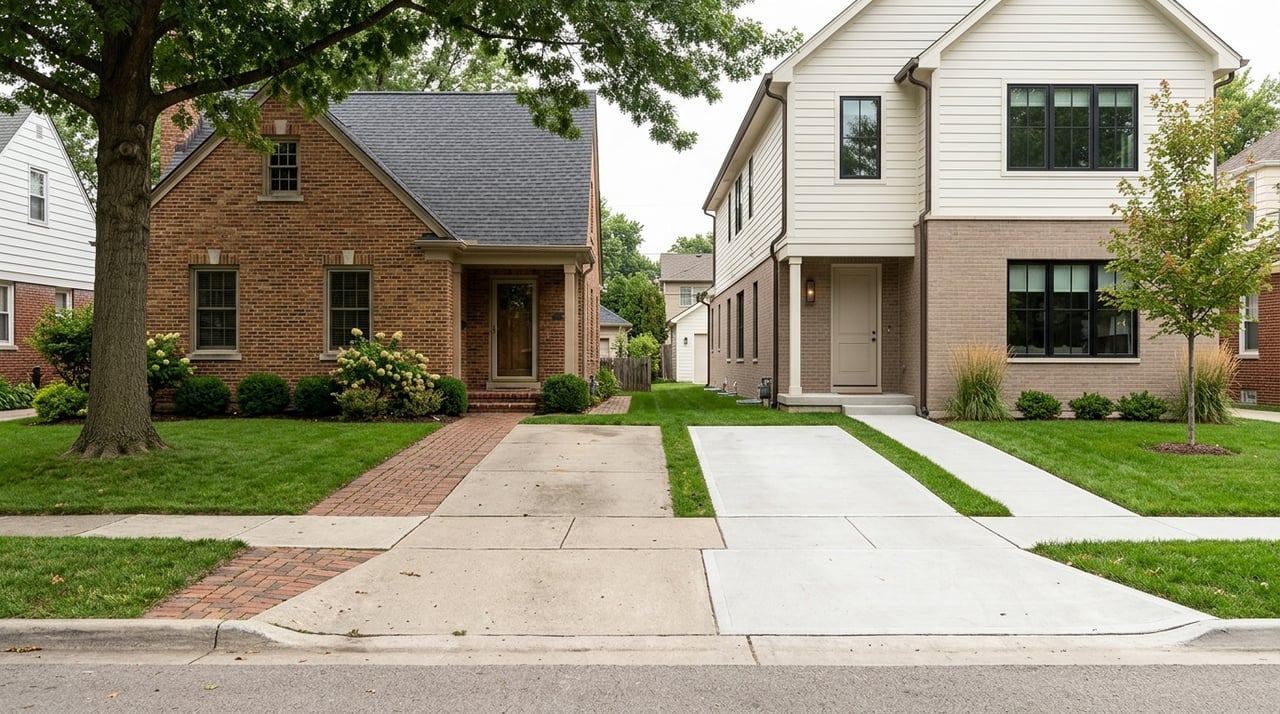
Trying to choose between a brand-new neighborhood and an established street in Westfield or Noblesville? You are not alone. For many buyers, this decision shapes everything from your daily routine to your maintenance expectations and long-term resale potential. The good news is that both cities offer strong options, but they deliver a different experience. This guide will help you compare the tradeoffs so you can focus on the setting that fits your goals best. Let’s dive in.
Westfield vs. Noblesville at a glance
Westfield and Noblesville are both active Hamilton County markets, but they do not feel exactly the same. U.S. Census QuickFacts for Westfield shows Westfield’s 2024 population estimate at 62,994, up 35.6% from 2020, with a median owner-occupied housing value of $425,700. In comparison, Noblesville’s 2024 population estimate was 75,239, up 7.7% over the same period, with a median owner-occupied housing value of $349,700.
That does not mean one city is better than the other. It does suggest that Westfield currently leans more heavily toward newer, higher-priced housing, while Noblesville offers a stronger mix of established suburban housing and a more historic core identity. If you are deciding between new construction and an older neighborhood, that difference matters.
Why new construction appeals
New construction often attracts buyers who want a more predictable, plan-driven experience. In both Westfield and Noblesville, newer communities tend to offer organized layouts, shared amenities, and development standards that make it easier to understand what the neighborhood will look and feel like over time.
You may also appreciate the convenience factor. A new-build community can offer sidewalks, trails, common spaces, and home designs shaped by a master plan rather than decades of piecemeal change. For buyers who value a more structured environment, that can be a major benefit.
Westfield new-build examples
Westfield is a strong place to look if you are drawn to newer neighborhoods. City materials reference communities such as Osborne Trails Phase II and Aberdeen at Chatham Hills, along with future Lennar subdivisions.
Westfield’s planning framework helps explain why many newer neighborhoods there feel connected and consistent. The city’s ordinance requires internal sidewalks or pathways along internal streets and connections to existing or planned pedestrian networks, while lot standards in one residential ordinance range from 3,780 square feet for alley-loaded lots to 9,600 square feet for larger front-load lots. You can see that structure in the city’s zoning and residential ordinance materials.
Noblesville new-build examples
Noblesville also has major new-community activity, especially at the master-planned scale. The city’s Gatewood Lakes overview describes an 1,100-plus-acre community on the east side that is expected to break ground in 2026 and build out over seven to ten years. Plans include single-family homes, townhomes and duets, multifamily homes, 140 acres of green space and blueways, a mini-marina, and more than 20 miles of trails.
Another useful example is Finch Creek by Del Webb. City plan documents show just how detailed a newer development can be, with multiple housing types, lot-width standards, minimum lot sizes, and amenities that include a pool, pickleball courts, trails, lawn areas, and garden spaces.
Why established streets appeal
Established streets offer a different kind of value. Instead of a uniform neighborhood plan, you often get more variation in home styles, more mature trees, and a setting shaped over time rather than all at once.
For many buyers, that sense of character is the draw. You may prefer streets where homes are less standardized, landscaping is more mature, and your location connects more closely to a historic downtown or long-standing neighborhood identity.
Westfield established examples
In Westfield, Village Farms is one of the clearest examples of an established neighborhood. The city describes it as one of Westfield’s largest single-family subdivisions, covering about 438 acres with 760 single-family homes. Originally platted in 1973, the neighborhood is noted for custom homes, mature trees, diverse lot types, community amenities, and access to the Monon Trail.
Downtown Westfield is another established-area option. City planning documents describe it as a historic downtown area, and project materials reference the Westfield Historic District and preservation-oriented zoning. If you want a setting tied more closely to a traditional downtown pattern, this area offers a different feel than a newer subdivision.
Noblesville established examples
Noblesville stands out for its historic core and older neighborhoods near downtown. The city’s downtown strategic plan highlights the Historic Core around the courthouse square and identifies Old Town neighborhoods as part of the downtown study area.
These areas are not simply older housing stock. Noblesville has continued to invest in downtown through projects aimed at pedestrian safety, mobility, and the overall experience of the historic core, including the city’s downtown improvement efforts and walkable district planning. That ongoing reinvestment can be especially appealing if location and character are high on your list.
Key tradeoffs to weigh
The right choice usually comes down to how you want to live. Here are the biggest areas to compare.
HOA structure and neighborhood rules
Newer communities are more likely to come with formal standards and organized governance. In Noblesville, the Architectural Review Board reviews residential planned developments for items such as housing characteristics, architectural standards, and landscaping requirements. Westfield’s planning ordinances also shape how newer neighborhoods are laid out and connected.
Established neighborhoods often feel less uniform. Instead of one master-planned structure, you may see a wider range of homes, additions, landscaping styles, and lot layouts. If you prefer consistency and clear community standards, new construction may feel easier. If you value variety, an established street may be the better fit.
Lot size and outdoor feel
One common myth is that new construction always means a tiny lot. The local documents tell a more nuanced story. Westfield ordinances show lot sizes ranging from compact to more generous, while Finch Creek plans range from 5,625 to 10,400 square feet depending on lot type.
That said, established neighborhoods still tend to offer a different outdoor feel. Village Farms is specifically described as having mature trees and diverse lot types, while Noblesville’s housing analysis notes that the city’s inventory has long been dominated by large-lot single-family detached homes. If mature landscaping matters as much as square footage, that distinction is worth paying attention to.
Walkability and daily access
In Westfield and Noblesville, walkability often depends less on a dense street grid and more on access to trails, parks, and downtown areas. Noblesville notes that it has more than 130 miles of trails, sidewalks, and greenways, including the White River Greenway, Midland Trace Trail, Finch Creek Trail, and Riverwalk connections through downtown.
Westfield also has a strong trail network, with city plans highlighting the Monon, Midland Trace, and other trail corridors, plus more than 10 miles of pedestrian and bicycle trails at Grand Park. In practical terms, some of the most convenient locations in either city are the homes near trails, parks, or the historic downtown cores.
Build style and maintenance expectations
A fair way to compare build quality is to think about consistency versus variation. New construction is usually easier to compare from one home to the next because it is shaped by current design review and development standards. Established neighborhoods offer more character, but also more differences from house to house.
Neither option is automatically better. If you want a more standardized home-shopping process, new construction often provides it. If you enjoy homes with more individual style and a streetscape that has developed over time, established areas can be more compelling.
Long-term resale perspective
Both cities have solid local factors that support buyer interest, but they may do so in different ways. Westfield’s faster growth, higher median owner-occupied value, and strong pace of construction suggest continued demand for newer product. The city’s 2022 fourth-quarter report said the building department processed 1,582 permit applications that year, including 1,094 single-family home starts.
Noblesville, meanwhile, offers appeal through its established housing base, downtown reinvestment, and historic identity. If you are thinking ahead to resale, it can help to ask whether you want your future buyer to be drawn more by new systems and amenities or by location, character, and mature surroundings.
Which option may fit you best
If you are drawn to planned amenities, newer systems, and a more structured neighborhood environment, new construction in Westfield or Noblesville may feel like the stronger match. Westfield, in particular, tends to read as more construction-heavy today.
If you are drawn to mature trees, more architectural variety, and stronger ties to a historic downtown setting, established streets may offer more of what you want. Noblesville often stands out here, especially around its Historic Core and Old Town neighborhoods.
The best choice is not about picking a winner between new and old. It is about matching the setting to your priorities, your timeline, and the way you want your next home to function day to day.
If you are weighing both options in Westfield or Noblesville, a neighborhood-level strategy can make the decision much clearer. Kelly Todd can help you compare the feel, tradeoffs, and market positioning of specific communities so you can move forward with confidence.
FAQs
What is the main difference between new construction and established streets in Westfield and Noblesville?
- New construction usually offers planned amenities, newer systems, and more formal neighborhood standards, while established streets usually offer mature trees, more character, and stronger ties to historic or long-standing neighborhood identity.
Is Westfield or Noblesville more focused on new construction?
- Westfield appears more construction-heavy today, while Noblesville offers a larger share of established housing along with major new-community projects.
Are lot sizes always smaller in new construction neighborhoods in Westfield and Noblesville?
- No. Local planning documents show a range of lot sizes in newer communities, though established neighborhoods are still more likely to have mature landscaping and a less uniform lot pattern.
Which established neighborhoods are notable in Westfield and Noblesville?
- In Westfield, Village Farms and downtown Westfield are strong established-area examples. In Noblesville, the Historic Core and Old Town neighborhoods near downtown are key examples.
What should buyers consider about walkability in Westfield and Noblesville?
- In both cities, walkability is often strongest near trails, parks, and downtown areas rather than in a dense urban grid, so location within each city matters as much as the city itself.